
✓
Shared surface review
We look at drive aisles, parking zones, entrances, worn edges, and pavement transitions so the inspection reflects the connected nature of the property.
Serving Atlanta, Georgia & surrounding areas
Mon–Fri 8am–6pm · Sat 9am–2pm
Plan shared asphalt with residents and access in mind. Roswell communities and property owners can schedule sealing, repairs, striping, and paving around the pavement people rely on together.
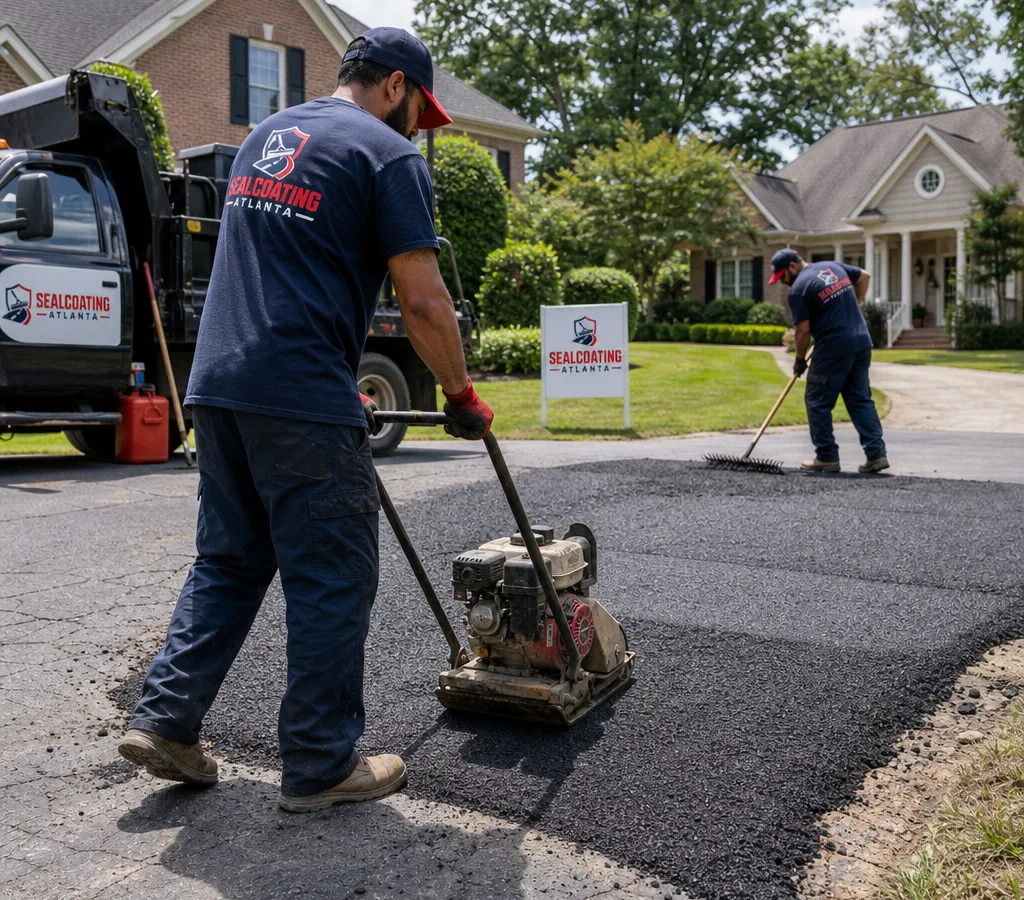
Shared drive aisles, townhome parking areas, and connected residential surfaces call for more than a quick coat of sealer. The project has to consider pavement condition, access points, and how residents will move while work is underway.
Sealcoating Atlanta can assess the asphalt, address cracks or repairs in the scope, and coordinate protective work with striping where it makes sense. The result starts with a clear plan for the surface and the people who use it.
Roswell is served from 587 Whitehall St SW, Suite 5, Atlanta, GA 30303. Set up an on-site assessment at (470) 990-9686 for a shared drive aisle, community lot, driveway, or other asphalt surface.
When several homes or users depend on the same pavement, the scope needs practical access thinking. We connect the maintenance work to the surface layout and use patterns.
We look at drive aisles, parking zones, entrances, worn edges, and pavement transitions so the inspection reflects the connected nature of the property.
Details about residents, vehicles, gates, and circulation help shape a scope that accounts for the work itself and the property activity around it.
Open cracks, failed areas, and patch needs are identified before sealcoating so the maintenance plan does not treat surface protection as a substitute for needed repairs.
Prepared asphalt can receive an even sealcoat application with attention to curbs, concrete borders, and the edges that make a shared area look orderly.
The completed project includes return guidance that property contacts can use when communicating how and when treated areas should be used again.
Community pavement is rarely a blank, unused surface. Cars need to enter, visitors need to navigate, and property contacts need a plan that makes the work understandable before equipment reaches the site.
That is why the initial visit includes more than asphalt condition. We ask about the layout, daily circulation, and any access details that should inform the scope or service timing.
Roswell projects benefit when maintenance is considered as an operational task as well as a surface treatment. Clear planning makes it easier to coordinate sealcoating, repairs, and markings with the way the property functions.
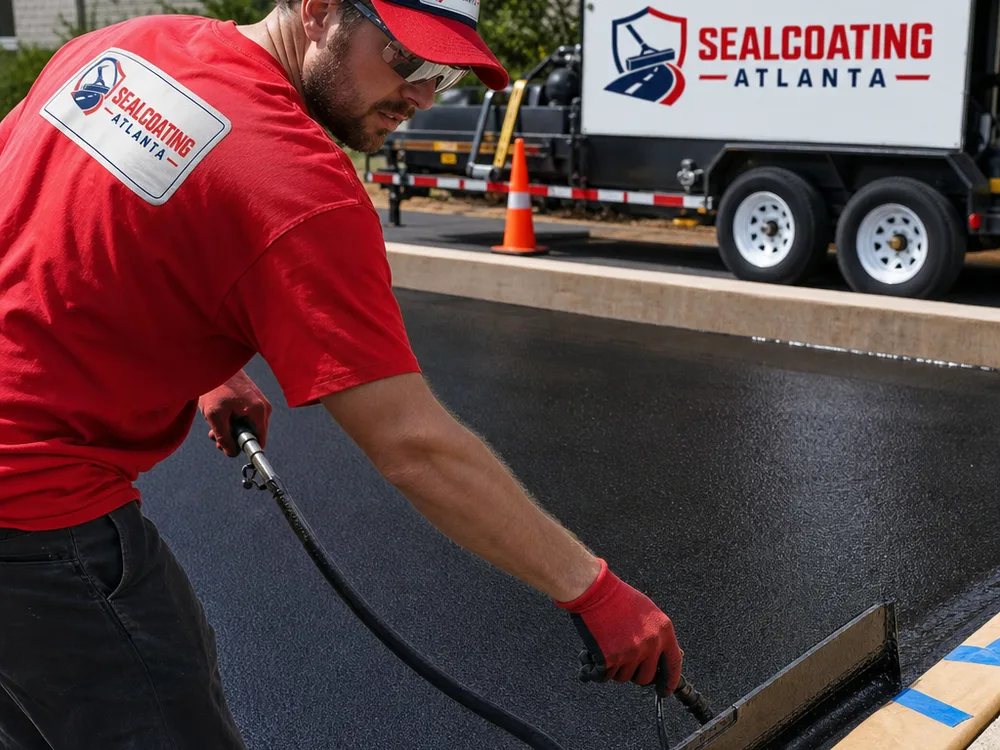
We use site information and pavement observations to organize a sensible project plan. The process keeps condition, circulation, and post-service guidance connected.
The assessment covers shared lanes, parking sections, entries, surface changes, and access details that can affect the project plan.
We gather information about vehicles, resident circulation, gates, and communication needs before recommending the work sequence.
Cracks, worn material, patch areas, and edges are reviewed so repairs or prep can be included ahead of protective coating.
The approved sealing, repair, paving, or striping scope is completed with attention to the property boundaries and usable sections.
Property contacts receive guidance about access after service so they can help users avoid treated surfaces during the relevant cure period.
Projects are measured by the surfaces included: residential and light-commercial sealing is often $0.18 to $0.45 per square foot. Smaller driveways commonly run $250 to $650, and larger parking areas or multi-section layouts can fall between $1,200 and $6,000+.
A connected layout, crack treatment, repairs, access planning, perimeter detail, and striping can change the proposed scope. Site measurement and inspection determine the exact cost.
These photos illustrate asphalt repair, protected curb-line coating, refreshed parking guidance, and marked access areas: details that matter when pavement is used by many people.
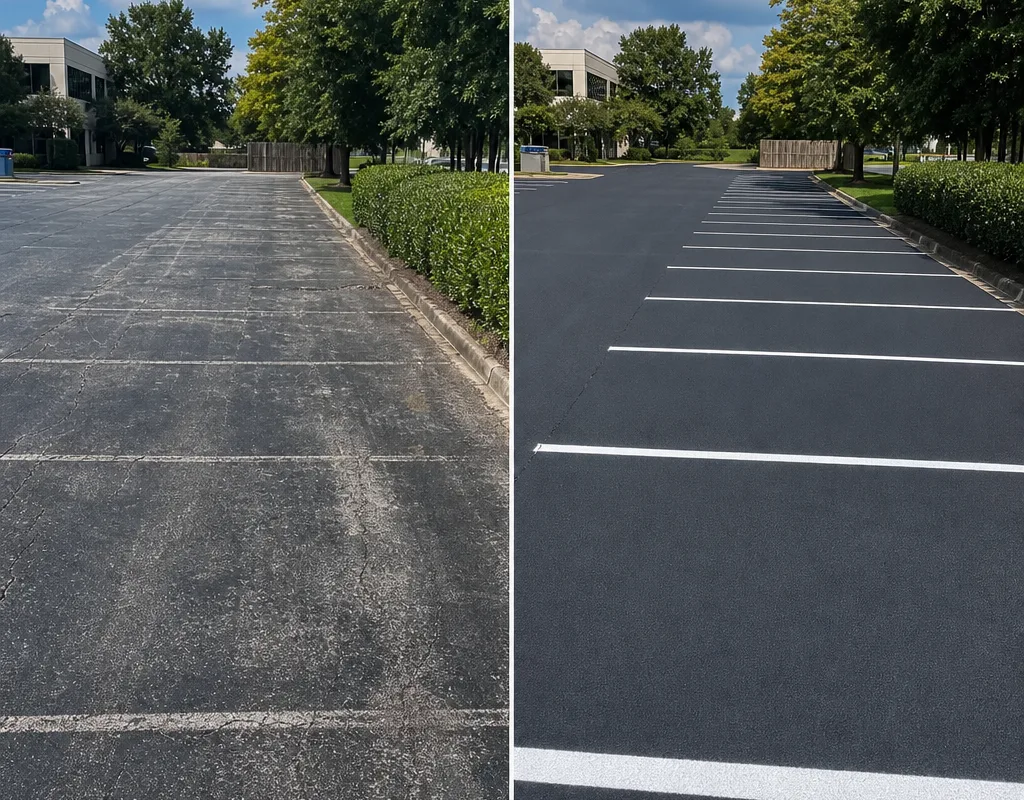
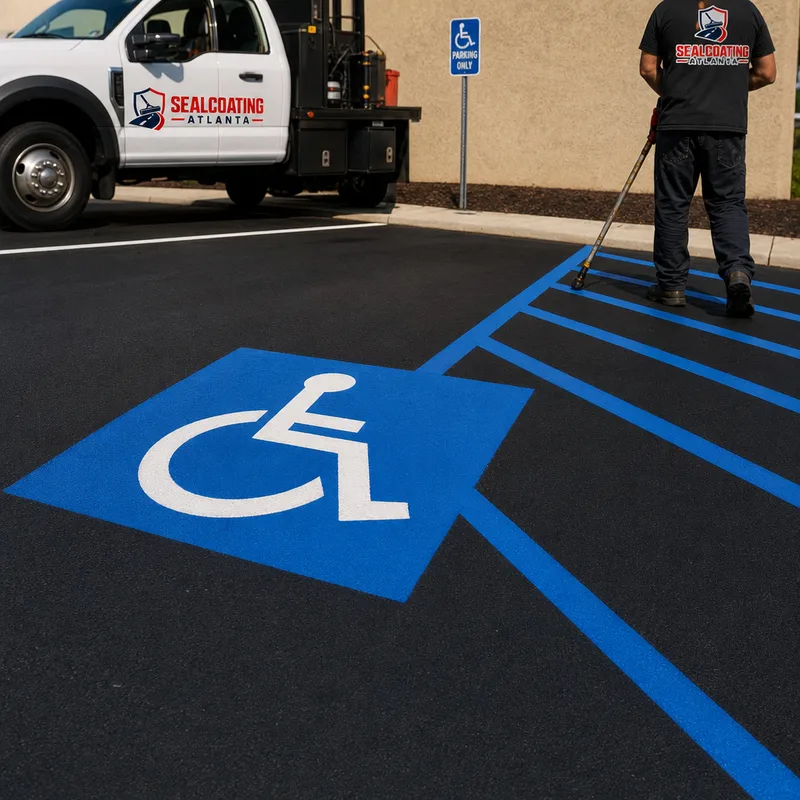
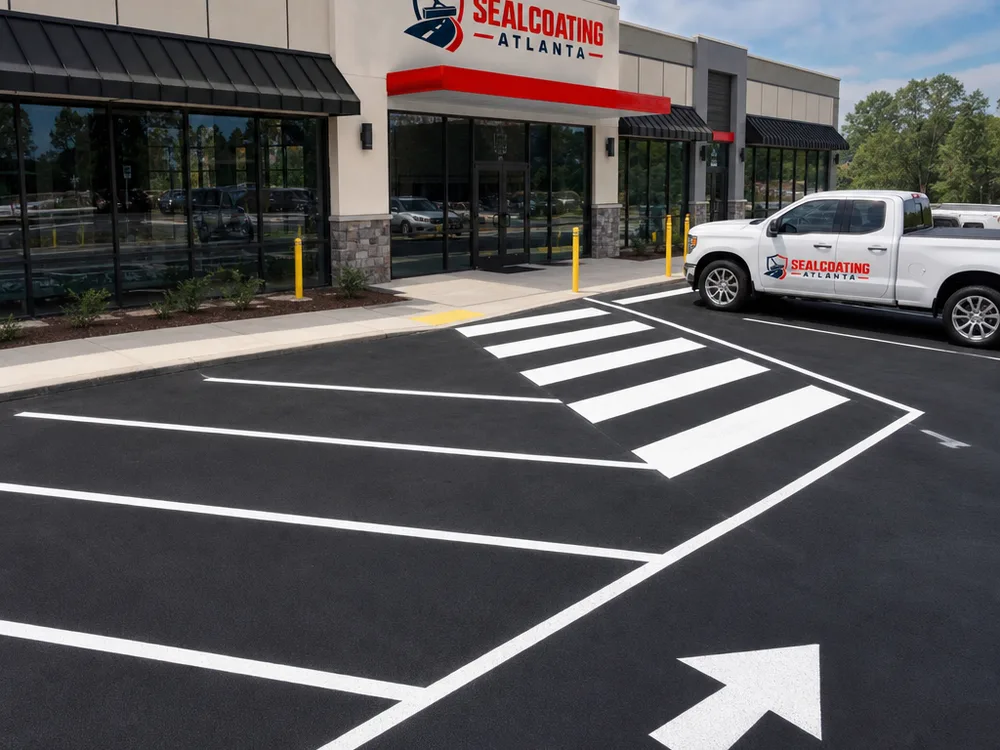
The questions below focus on the practical issues that come with maintaining drive aisles, parking areas, and other asphalt surfaces used by residents or multiple visitors.
Start by identifying access needs, parking patterns, gates, and the people who need advance notice. Share that information during the inspection so the proposed project can account for circulation and provide useful return-to-service guidance.
Access considerations are part of the planning discussion before a scope is finalized. The best approach depends on the layout, the pavement condition, the services selected, and the areas that need to remain available during work.
Cracked or failing sections are reviewed before sealing because a coating cannot correct structural problems underneath. The inspection determines whether crack treatment, patching, or other asphalt work belongs ahead of surface protection.
Useful details include the paved sections involved, access points, current surface condition, known cracks or repairs, and whether striping is part of the desired scope. Measurements and a site review establish the actual cost.
Restriping is worth considering when existing markings are faded, unclear, or being affected by planned sealcoating. Reviewing the layout with the pavement work helps create a more orderly finished parking surface.
We can provide the property contact with guidance based on the service performed and conditions on the work day. That contact can then communicate when treated areas should return to normal use.
Share the property layout, access needs, and pavement concerns with our team. Our review will cover the asphalt and recommend a scope for shared drive aisles, parking areas, driveways, repairs, sealcoating, striping, or paving.
Request a quote
Send the size, surface condition, and access details. We reply with next steps and schedule an on-site look before any written scope.