
✓
A pavement condition review
Visible cracking, loose aggregate, patched sections, and drainage clues are considered at the start so the recommended work matches the surface instead of relying on a one-size approach.
Serving Atlanta, Georgia & surrounding areas
Mon–Fri 8am–6pm · Sat 9am–2pm
Protect worn asphalt before small surface problems spread. Sealcoating, crack work, and careful preparation give Sandy Springs driveways and parking areas a better maintenance plan.
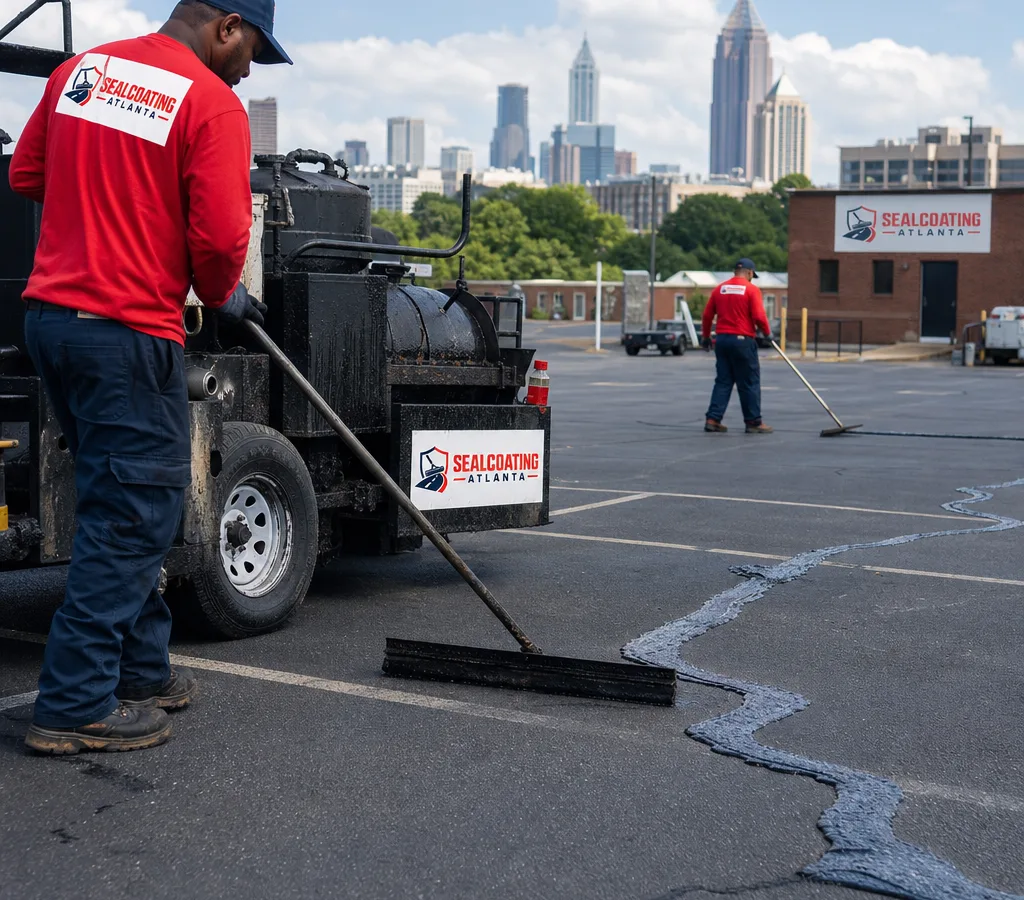
Cracks, raveling, and patched areas deserve attention before a new coat goes down. Our Sandy Springs service starts by reading the pavement condition, so sealing supports a surface that is ready for protection rather than covering problems that need repair.
A driveway or parking area can need several kinds of work at once. We handle crack sealing, asphalt repairs, sealcoating, paving, and striping as the scope calls for, then explain how each step supports the condition of the pavement.
Sealcoating Atlanta serves Sandy Springs from 587 Whitehall St SW, Suite 5, Atlanta, GA 30303. Contact us at (470) 990-9686 for an on-site inspection and discuss a practical path for your asphalt.
Surface protection works best after the issues already present have been considered. The scope can address cracks, failed patches, and edges before the finished coat is applied.
Visible cracking, loose aggregate, patched sections, and drainage clues are considered at the start so the recommended work matches the surface instead of relying on a one-size approach.
Cracks are cleaned and treated where appropriate before sealing. This helps keep the protective coat from being asked to bridge movement or hide deterioration that needs attention.
When an area needs patching or other asphalt work, the inspection separates that work from routine coating so you can understand what each part of the project is meant to do.
After preparation, sealcoat is applied with attention to coverage and perimeter detail. The goal is a uniform protective layer rather than a heavy, uneven surface.
You receive instructions based on the work completed and the conditions on service day, including when the treated surface can return to regular use.
Water can enter an open crack long before the surrounding pavement looks severely damaged. Addressing those openings as part of maintenance helps protect the asphalt from the inside out and gives the finished coat a more stable surface.
Patches also tell a story about prior wear. A review of their edges, transitions, and surrounding material helps determine whether sealing is the next sensible step or whether repair should lead the project.
For Sandy Springs property owners, the useful question is not simply whether asphalt can be coated today. It is which preparation steps will make the maintenance work worthwhile.
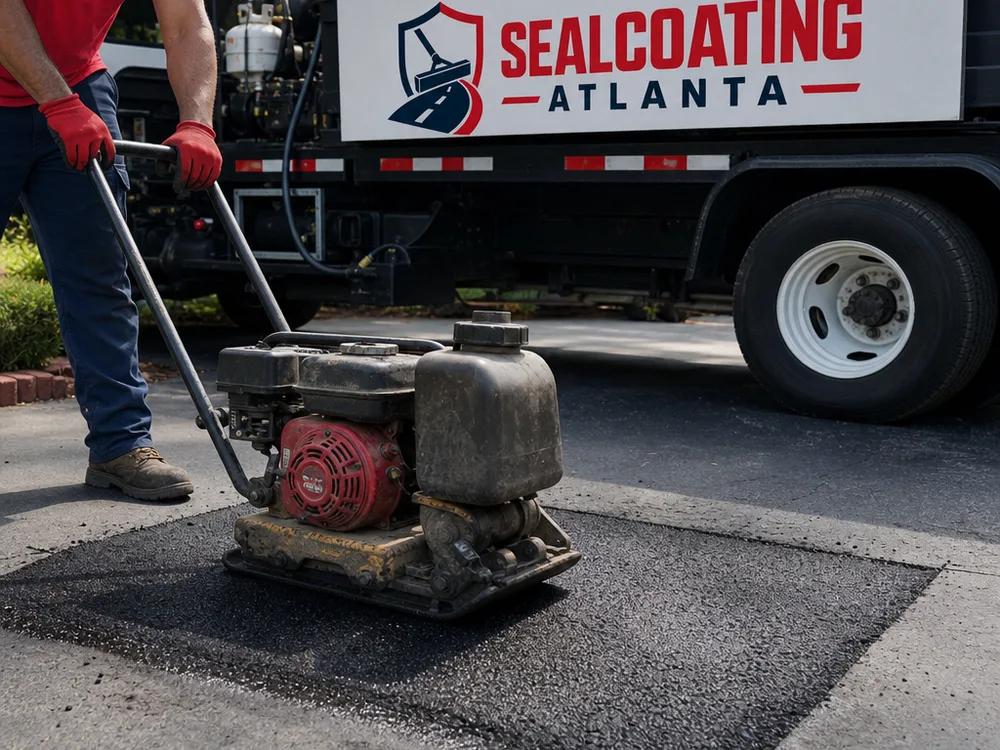
Each project begins with the current surface, then moves through the work needed to make sealing useful. Access, preparation, and cure guidance are discussed around the actual property.
The visit identifies cracking, worn areas, previous patches, access points, and any site conditions that affect the proposed maintenance plan.
We outline whether crack work, repairs, sealing, striping, or paving belong in the recommended scope before scheduling work.
Loose material, debris, and cracks receive the attention required for the selected work so the surface is ready for the next stage.
Sealcoat, repairs, or markings are completed according to the agreed scope, with care around edges and areas that remain in use.
Before leaving, we provide return-to-service guidance based on the work and the conditions affecting cure time.
Residential and light-commercial sealing commonly falls between $0.18 and $0.45 per square foot. Smaller driveways often range from $250 to $650, while larger parking areas and multi-section layouts can range from $1,200 to $6,000+.
Crack filling, patch needs, layout complexity, access, edge detail, and surface preparation all affect the scope. After we inspect and measure the site, we confirm the exact cost.
These images show the kind of crack treatment, saw-cut repair, compaction, and finished patch transitions that can inform a pavement maintenance conversation.
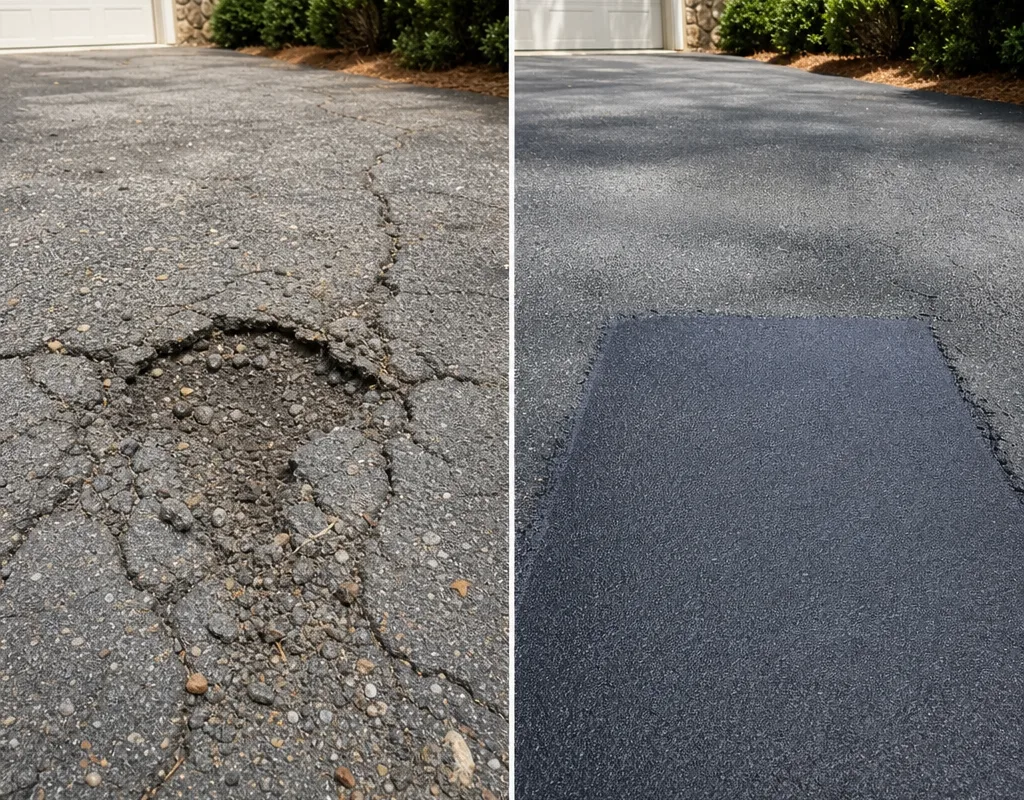
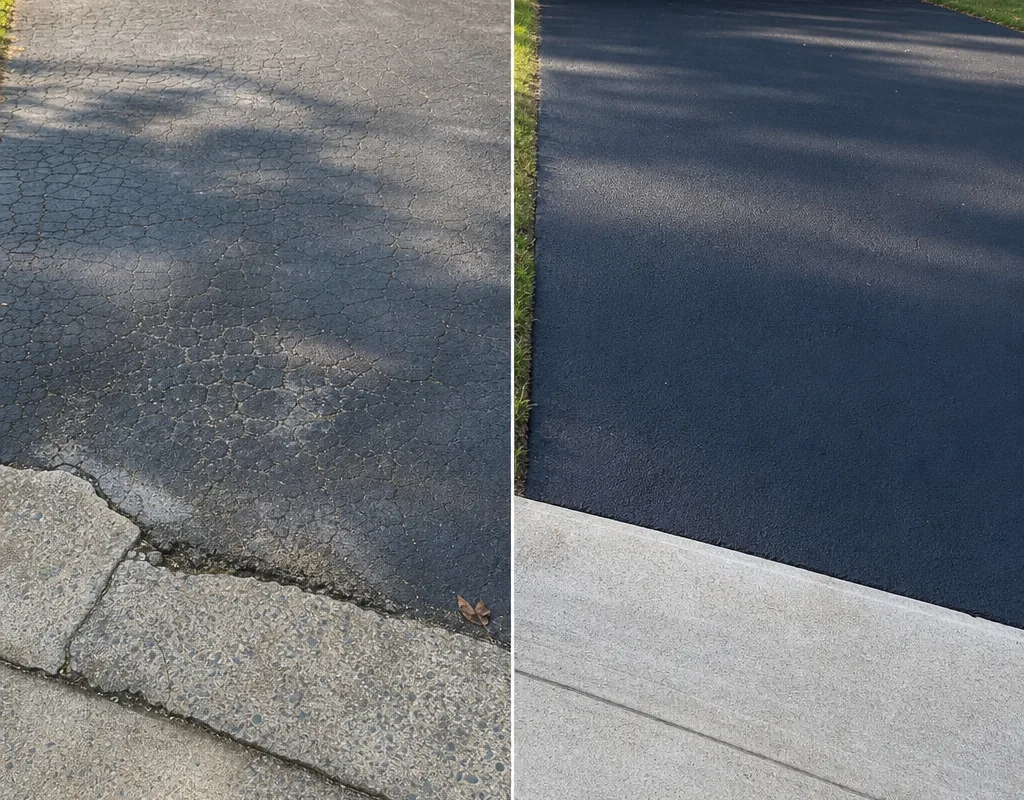
These answers cover the decisions that often come up when a driveway or parking surface shows cracking, patching, or uneven wear before it is scheduled for protection.
Cracks are evaluated before sealing because a protective coat is not designed to correct pavement movement or a failing base. Smaller cracks may be cleaned and filled as part of preparation, while wider or spreading patterns can call for repair work first.
An older patch can often be included in a sealcoating project when its edges and surrounding pavement are sound. During the inspection, we look for raveling, settlement, or separation that could make repair the better first step.
Raveling occurs when the asphalt surface loses aggregate and begins to look rough or thin. Sun exposure, water, traffic at the edge, and past wear can all contribute, so the visit focuses on what preparation will help the surface most.
Crack treatment helps limit water entry and supports maintenance, but it cannot eliminate movement in the pavement or below it. The condition, width, and pattern of the cracks guide what work is appropriate before a protective coating is applied.
Tell us about vehicles, parking needs, gates, and areas that must stay available. That information helps shape the work plan and lets us provide realistic guidance for access while the surface is being prepared or cured.
Patching may be the better choice when asphalt has broken apart, settled, or lost structural support. An on-site review distinguishes cosmetic surface wear from conditions that need asphalt repair before maintenance can continue.
Bring us the cracks, rough patches, or fading areas you are seeing, and we will inspect the surface before recommending a scope. Call Sealcoating Atlanta to plan repair, sealing, striping, or paving from the Atlanta shop.
Request a quote
Send the size, surface condition, and access details. We reply with next steps and schedule an on-site look before any written scope.